
Traction Alopecia Hair Transplant

    Restoring Hair Lost From Years of Tension

    Traction alopecia is hair loss caused by repeated or prolonged tension on the hair follicles. Tight braids, extensions, weaves, locs, ponytails and other hairstyles that repeatedly pull on the hair can gradually damage the follicles—particularly around the frontal and temporal hairline.

    In its earlier stages, traction alopecia may be reversible when the source of tension is removed. When traction continues for years, however, follicles can eventually become permanently damaged and areas of scar tissue can develop.

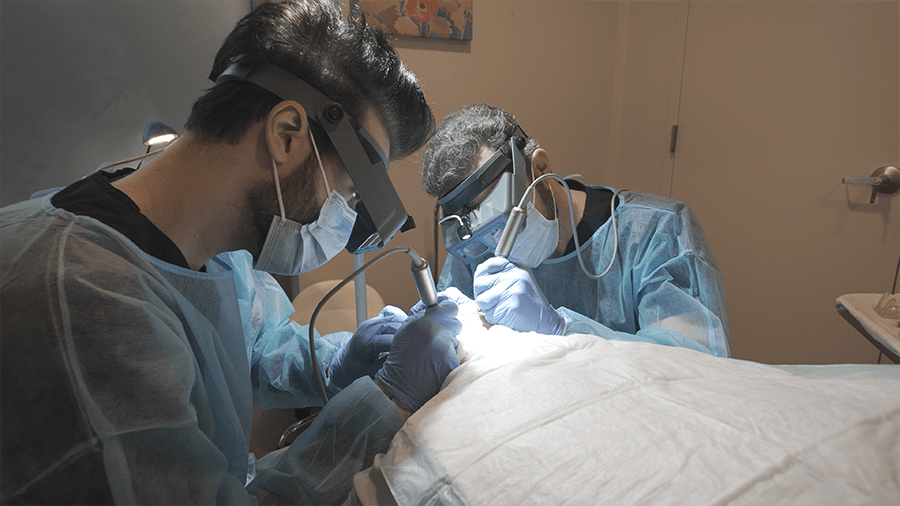
    Signature Hair Restoration team

    For appropriately selected patients with permanent hair loss, hair transplantation may provide an opportunity to reconstruct the hairline and restore hair to areas affected by traction alopecia.

    But not every patient with traction alopecia is a good candidate for a hair transplant.

    At Signature Hair Restoration, determining whether we should transplant is just as important as determining how many grafts we can transplant.

    What Causes Traction Alopecia?

    Hair follicles are designed to withstand normal movement and styling. Problems can develop when the follicle is repeatedly subjected to excessive tension.

    The location of hair loss usually corresponds with the areas receiving the greatest amount of tension.

    For many patients, this means thinning begins around the temples, frontal hairline or sides of the scalp.

    One of the most important things to understand about traction alopecia is that it can change over time.

    In earlier disease, follicles may still be present and capable of producing hair. With continued trauma, chronic follicular damage can eventually result in permanent follicular loss and scarring.

    That is why early evaluation matters.

    Traction alopecia has been associated with hairstyles and practices including:

    • Tight braids and cornrows
    • Hair extensions
    • Weaves
    • Tight ponytails and buns
    • Locs placed under significant tension
    • Repeated pulling along the frontal or temporal hairline
    • Some occupational or athletic hairstyles
    • Hair practices combining significant tension with chemical or thermal treatments

    Can Traction Alopecia Grow Back?

    Sometimes.

    The answer depends largely on how much permanent follicular damage has occurred.

    Early Traction Alopecia

    When the follicles have not been permanently destroyed, removing the source of traction may allow improvement.

    Depending on the patient’s condition, medical treatment may also be considered. Minoxidil is one treatment that has been reported in the medical literature for traction alopecia and may be appropriate for selected patients under medical supervision.
    Longstanding Traction Alopecia

    When traction continues for an extended period, follicles may eventually be destroyed and replaced by fibrotic tissue.

    At this point, simply changing hairstyles or using hair-growth medication may not restore follicles that are no longer present.

    For selected patients with permanent loss, hair transplantation can then become an option.

    Can You Get a Hair Transplant for
    Traction Alopecia?

    Yes—but patient selection is extremely important.

    Hair transplantation works by relocating healthy follicles from a donor area, generally the back and sides of the scalp, into areas where permanent hair loss has occurred.

    Traction alopecia presents a different challenge than typical male or female pattern hair loss because longstanding traction can create varying degrees of scar tissue within the recipient area.

    Hair transplanted into healthy scalp generally has a more predictable environment than hair transplanted into significantly scarred tissue.

    For this reason, our evaluation focuses not simply on whether hair is missing, but on the quality of the recipient area, amount of scarring, remaining native hair, size of the area requiring restoration and available donor supply.

    Signature Hair Restoration surgical team

    The Signature Approach to Traction
    Alopecia Candidacy

    There is no single hair transplant plan that works for every patient with traction alopecia.

    At Signature Hair Restoration, we think about surgical candidacy using three practical categories:

    1. Mild Traction Alopecia

    Often the Most Favorable Hair Transplant Candidate

    A patient with mild traction alopecia may have thinning around the hairline or temples while still maintaining residual hairs throughout much of the affected area.

    This can be an encouraging clinical sign because it may indicate that complete follicular destruction and extensive scarring have not occurred throughout the recipient area.

    When the scalp appears healthy, the hair loss is stable, the source of traction has been eliminated and sufficient donor hair is available, these patients may be very good candidates for FUE hair transplantation.

    Because existing hairs remain in the area, the objective is often to carefully add density between native hairs while rebuilding the natural shape of the hairline.

    For the right patient, relatively modest graft numbers can sometimes produce a meaningful cosmetic improvement.

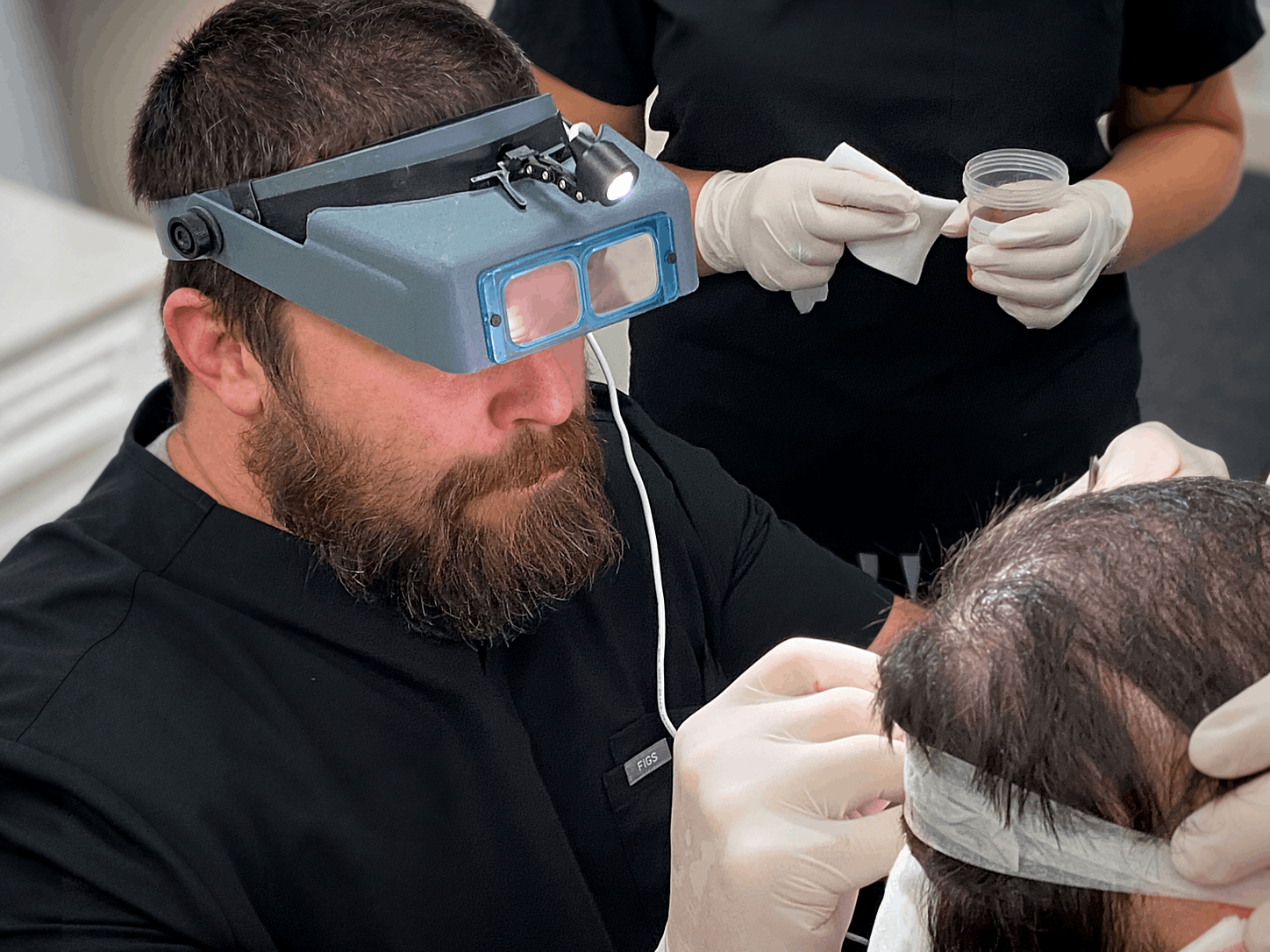
    Hair and scalp examination

    2. Moderate Traction Alopecia

    Transplantation May Be Possible, but Requires More Careful Planning

    Moderate traction alopecia can present a more complicated situation. These patients may have larger areas of permanent hair loss, fewer residual hairs and evidence of increasing scar formation.

    Our team will evaluate factors such as:

    • The amount and location of scar tissue
    • Remaining follicular openings and native hairs
    • Scalp characteristics
    • Size of the area requiring restoration
    • Donor density
    • Evidence of ongoing traction or inflammation
    • Other possible causes of hair loss

    Hair transplantation may still be possible, but outcomes in scarred tissue can be less predictable than transplantation into healthy, non-scarred scalp.

    In selected patients, we may recommend delaying surgery while the scalp and existing hair are medically optimized.

    Treatment could include medications such as topical or oral minoxidil when medically appropriate. Oral minoxidil is an off-label treatment for hair loss and requires physician evaluation.

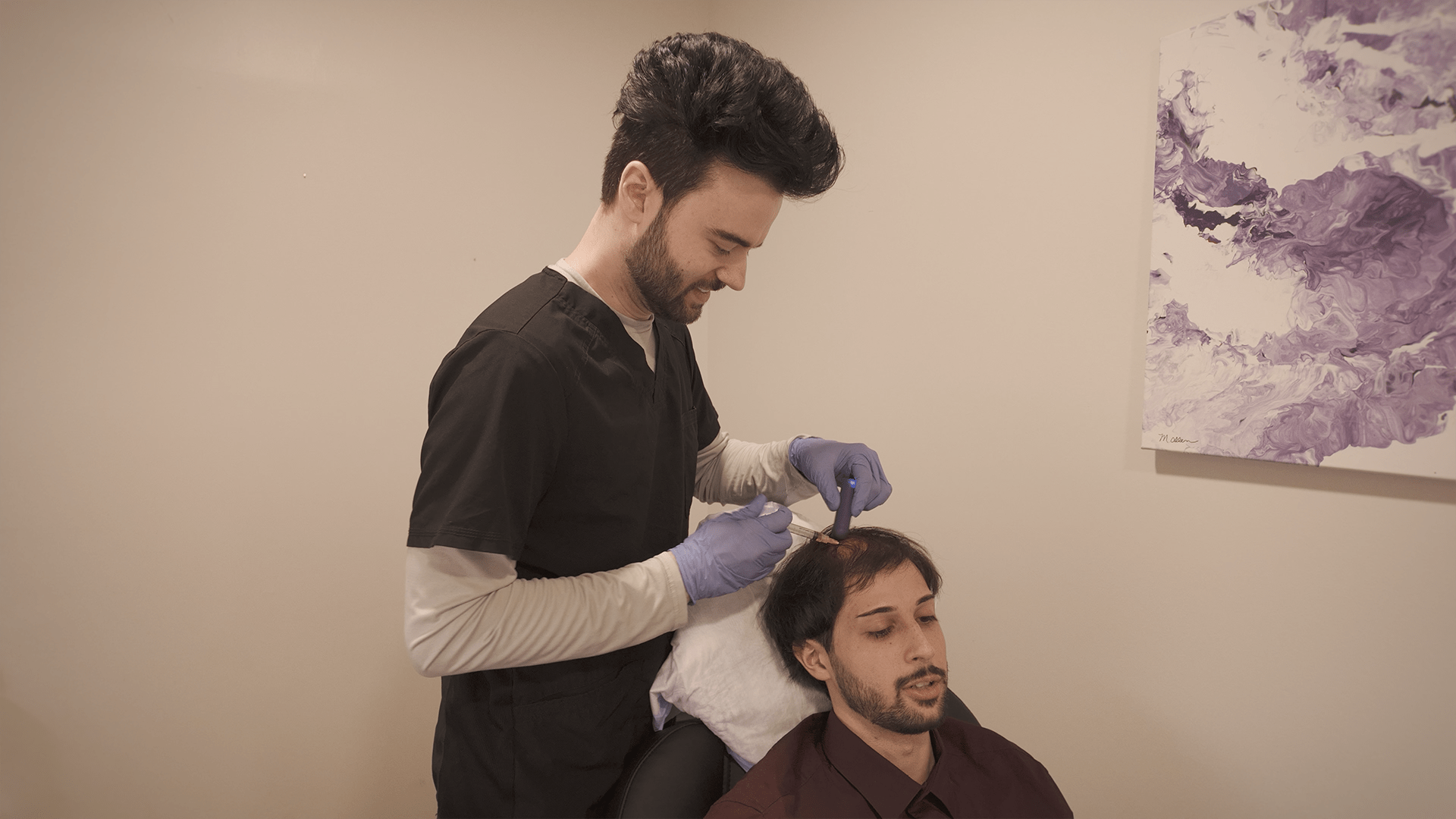
    Signature may also discuss treatments such as platelet-rich plasma (PRP) in selected patients.

    PRP injection treatment for hair loss

    It is important to understand the limitations of these treatments. Neither minoxidil nor PRP should be presented as a way to reliably remove established scar tissue or recreate follicles that have already been permanently destroyed.

    The objective is to create the best treatment strategy for the individual patient before deciding whether transplantation is worthwhile.

    In some moderate cases, a more conservative transplant plan may also be appropriate because graft growth within areas of significant fibrosis can be less predictable.

    3. Severe Traction Alopecia

    Hair Transplantation May Not Be Recommended

    Advanced traction alopecia may involve extensive areas of smooth, scarred scalp with substantial permanent follicular loss. At this stage, two major limitations can arise.

    Recipient-Site Limitations

    Significant scar tissue may create a less predictable environment for transplanted follicles. The greater the degree of fibrosis and damage within the recipient area, the more cautious we need to be when predicting graft survival and cosmetic density.

    Donor Supply Versus Demand

    Every patient has a limited amount of usable donor hair.

    If traction alopecia affects a very large area, the number of grafts required to create adequate cosmetic coverage may exceed what the donor area can safely provide.

    This creates a supply-and-demand problem.

    Even if transplantation is technically possible, that doesn’t necessarily mean it is the right procedure.

    When we don’t believe the available donor supply or recipient scalp can produce a meaningful result, we may recommend against hair transplantation.

    Our goal is not simply to perform a procedure.

    Our goal is to recommend surgery only when we believe there is a reasonable opportunity to create a worthwhile cosmetic improvement.

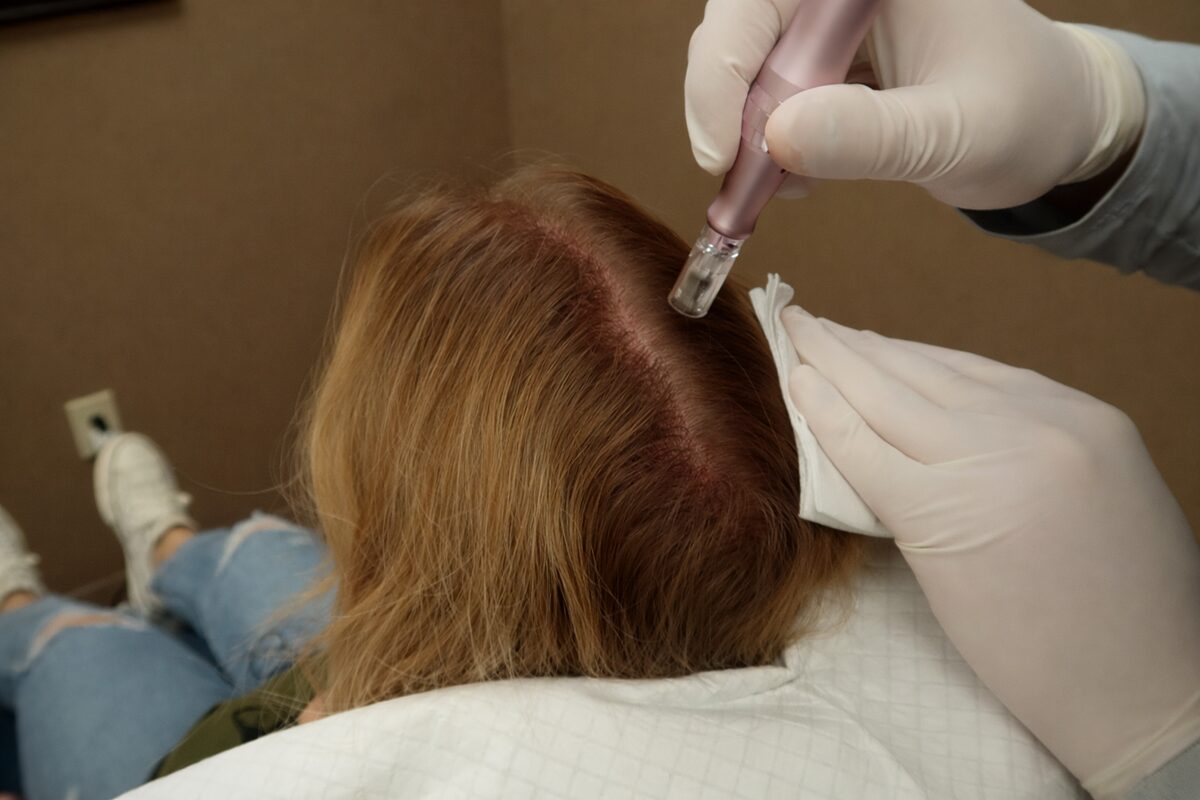
    PRP and microneedling treatment

    How We Evaluate Traction Alopecia
    Before a Hair Transplant

    A traction alopecia consultation requires more than counting grafts.

    We evaluate the entire pattern of hair loss and look for signs that help us determine whether transplantation is appropriate.

    Your evaluation may include consideration of:

    History of traction:

    We want to understand which hairstyles or practices may have contributed to the hair loss and how long the area has been affected.

    Stability of the hair loss:

    Continued tension on the hair after transplantation could jeopardize both existing and transplanted follicles. The source of traction must be addressed.

    Residual hair:

    Remaining hairs within the affected area can provide important information about the extent of follicular loss.

    Scarring and recipient-site quality:

    Longstanding traction can cause fibrosis and permanent follicular destruction. The degree of scarring can influence surgical planning and the predictability of growth.

    Donor hair:

    We evaluate density and available follicular units in the donor region to determine whether enough hair can be safely moved to achieve the desired result.

    Other types of hair loss:

    Not every receding hairline or area of thinning is traction alopecia. Conditions including androgenetic alopecia and inflammatory/scarring alopecias can sometimes create similar patterns and may require a different treatment strategy.

    When the diagnosis is uncertain or another scalp disorder is suspected, additional medical or dermatologic evaluation may be recommended before surgery.

    FUE Hair Transplant for
    Traction Alopecia

    Dr. Dambro

    For appropriate candidates, Signature can use Follicular Unit Excision (FUE) to restore areas of permanent traction-related hair loss.

    During FUE, individual follicular units are carefully extracted from the donor area and transplanted into the areas requiring restoration.

    Hairline reconstruction is not simply about filling an empty space with hair.

    The angle, direction, distribution and density of each graft influence how natural the final result appears.

    This becomes particularly important around the temples and frontal hairline, where traction alopecia commonly occurs.

    Our objective is to create a restoration that complements the patient’s existing hair rather than creating a transplanted appearance.

    How Many Grafts Are Needed
    for Traction Alopecia?

    There is no standard graft number for traction alopecia.

    A relatively small temporal recession may require significantly fewer grafts than extensive loss extending across the entire frontal hairline and sides of the scalp.

    During your consultation, our team can evaluate these factors and recommend an individualized surgical plan.

    Your graft recommendation depends on:

    • Size of the affected area
    • Desired hairline
    • Existing hair density
    • Degree of scarring
    • Hair characteristics
    • Donor availability
    • Realistic density goals

    What Results Can I Expect?

    Hair transplantation is a process rather than an immediate result.

    Following transplantation, many of the transplanted hairs will initially shed while the follicles remain beneath the skin. New growth generally develops gradually over the following months.

    Results continue to mature over time.

    Traction alopecia patients should understand one additional consideration: transplantation into scarred scalp can be less predictable than transplantation into healthy scalp.

    This is why candidacy evaluation is so important.

    We would rather recommend against surgery than create unrealistic expectations about the amount of density or growth that can be achieved.

    Signature Hair Restoration team

    Will My Traction Alopecia Come Back
    After a Hair Transplant?

    A hair transplant does not eliminate the underlying mechanical cause of traction alopecia.

    Even after successful transplantation, hairstyles that repeatedly place excessive tension on the hair can continue to damage hair follicles.

    Patients undergoing restoration for traction alopecia should avoid returning to styling practices that place substantial stress on either their existing or transplanted hair.

    Protecting the result is part of the treatment.

    When Is It Too Late for a Traction
    Alopecia Hair Transplant?

    There isn’t a specific number of years after which transplantation becomes impossible.

    Instead, candidacy depends on what has happened to the scalp and follicles during that time.

    A patient with longstanding hair loss but a relatively favorable recipient area and good donor density may still be considered for transplantation.

    Another patient with extensive scarring, a very large area of loss and limited donor hair may not be a good surgical candidate.

    The severity of the follicular damage matters more than simply how long the hair loss has been present.

    Traction Alopecia Hair Transplant
    for Women

    Although traction alopecia can affect anyone exposed to repeated hair tension, it is frequently encountered in women who have worn tight hairstyles, braids, extensions or weaves over many years.

    Restoration in women requires careful attention to the existing hairline.

    Rather than creating a completely new hairline, the procedure may involve reconstructing areas that have gradually receded, filling temporal recession or adding density to areas where permanent follicular loss has occurred.

    The goal should be a hairline that looks natural both when the hair is worn down and when it is pulled away from the face.

    Signature Hair Restoration surgical team

    Frequently Asked Questions

    Is traction alopecia permanent?

    It can be.

    Early traction alopecia may improve when the source of tension is removed. Longstanding traction can eventually destroy follicles and create permanent scarring, at which point spontaneous regrowth becomes much less likely.

    Can minoxidil regrow traction alopecia?

    Minoxidil has been used in patients with traction alopecia, and published reports describe improvement in some patients. Results depend in part on whether viable follicles remain.

    Minoxidil cannot be expected to recreate follicles that have been permanently destroyed by scarring.

    Can PRP treat traction alopecia?

    PRP may be discussed as an adjunctive treatment in selected patients, but evidence specifically supporting PRP for traction alopecia is limited. It should not be considered a proven method of reversing established scar tissue or restoring follicles that have been permanently lost.

    Can FUE work in scar tissue?

    Hair can sometimes be successfully transplanted into scarred areas, but growth may be less predictable than transplantation into healthy scalp.

    The amount and characteristics of the scar tissue therefore play an important role in determining candidacy.

    Do I need to stop wearing braids, extensions or weaves?

    Any hairstyle creating significant tension on the affected area should be modified or discontinued.

    Continuing the same mechanical stress that caused the original hair loss can lead to additional damage.

    How do I know whether my follicles are permanently damaged?

    A consultation and scalp examination are the best place to start.

    Smooth areas with loss of visible follicular openings can suggest more advanced disease, while remaining hairs and follicular openings may indicate less extensive damage. When the diagnosis is uncertain, further medical evaluation may be appropriate.

    What if I have severe traction alopecia?

    Severe traction alopecia does not automatically mean a hair transplant is possible.

    Extensive scar tissue and a large area requiring restoration can create both recipient-site and donor-supply limitations. In some patients, transplantation may not be recommended.

    Find Out If You’re a Candidate

    Traction alopecia can range from relatively minor thinning around the temples to extensive permanent hair loss involving much of the frontal scalp.

    That is why the first question should not be:

    “How many grafts do I need?”

    It should be:

    “Am I a good candidate for a hair transplant?”

    At Signature Hair Restoration, we’ll evaluate your existing hair, donor supply, scalp condition, degree of hair loss and restoration goals before recommending surgery.

    If we believe a hair transplant can produce a meaningful improvement, we’ll develop an individualized plan.

    And if we don’t believe surgery is in your best interest, we’ll tell you.

    Schedule a consultation with Signature Hair Restoration to learn whether hair transplantation may be appropriate for your traction alopecia.

    Hair restoration consultation

    Medical References

    1. American Academy of Dermatology Association. Hairstyles that pull can lead to hair loss. The AAD explains the relationship between chronic hair tension and traction alopecia, the potential progression to permanent hair loss, prevention strategies and possible treatment approaches.
    2. Billero V, Miteva M. Traction alopecia: the root of the problem. Clinical, Cosmetic and Investigational Dermatology. 2018;11:149-159. A comprehensive review addressing the causes, clinical presentation, pathology, prevention and treatment of traction alopecia.
    3. Goldin J, Zito PM, Raggio BS. Hair Transplantation. StatPearls. National Center for Biotechnology Information. Reviews hair-transplant candidacy, donor characteristics and the importance of distinguishing scarring from non-scarring forms of alopecia.
    4. Khumalo NP, Ngwanya RM. Traction alopecia: 2% topical minoxidil shows promise. Report of two cases. Journal of the European Academy of Dermatology and Venereology. 2007;21(3):433-434.
    5. Beach RA. Case series of oral minoxidil for androgenetic and traction alopecia: Tolerability & the five C’s of oral therapy. Dermatologic Therapy. 2018;31(6):e12707.
    6. Kim SR, Craiglow BG. Treatment of traction alopecia with oral minoxidil. JAAD Case Reports. 2022;23:112-113.
    7. Awad A, Chim I, Sharma P, Bhoyrul B. Low-dose oral minoxidil improves hair density in traction alopecia. Journal of the American Academy of Dermatology. 2023;89(1):157-159.

    Medical information on this page is for educational purposes and is not a substitute for an individualized medical evaluation. Treatment recommendations, medication eligibility and hair-transplant candidacy vary by patient.

    Excellent
    5.0
    Based on +30 reviews
    Regina Templeton
    Regina Templeton
    1 week ago
    I have been a client of Greg Koher at Signature Hair Restoration for approximately four years, and my experience has been exceptional. Greg is highly knowledgeable, professional, and genuinely invested in helping his clients achieve the best possible results. He takes the time to listen, answer questions, and develop a personalized approach that fits individual needs and goals. Throughout the years, he has consistently provided outstanding service, support, and guidance.

    Greg has always made me feel like the best version of myself. His expertise, encouragement, and genuine care have helped me regain confidence and feel great about my appearance. The entire team at Signature Hair Restoration is welcoming, attentive, and dedicated to providing an outstanding experience.

    I am extremely grateful and would highly recommend Greg and Signature Hair Restoration to anyone considering hair restoration. Thank you for all you have done over the past four years! — Regina Templeton
    Seth Goodhart
    Seth Goodhart
    1 week ago
    Corey and the team were so incredibly helpful throughout the entire process. Corey gave me his personal cell that I could text, call or FaceTime anytime. He was very responsive about the procedure and setting up my appointment. The procedure itself was super comfortable and I got great results. I'm soon due for another transplant and will absolutely be going back to Corey and the gang. Thank you and keep up the good work!!
    Esmeralda Serrano
    Esmeralda Serrano
    3 weeks ago
    The staff are great and having PRP services here, I have been seeing growth with my second time coming in doing it. Everyone has been so great with me.
    Stan Sawyer
    Stan Sawyer
    3 weeks ago
    Great Dr's and care A+
    Bett T
    Bett T
    3 weeks ago
    Very satisfied with how efficient and prompt these nice folks are. Refreshing in these days!
    Fabian Dunn
    Fabian Dunn
    3 weeks ago
    Had a great experience. The staff is amazing. Very attentive on getting things done to help your progress. Love my results. Highly recommended.
    Christian Scott
    Christian Scott
    3 weeks ago
    I'm 6 months in and my hair is looking amazing! The staff and the process has been simple and pleasant. Highly recommend them.
    Jason Wilkins
    Jason Wilkins
    1 month ago
    This core team treated me when they were at a previous office, and the experience went very well. Sure it will be the same here. Customer service has started off great.
    Jason Welch
    Jason Welch
    1 month ago
    Top notch care. Friendly staff. I would go to them again. They did a good job on my hair.