Mega FUE Hair Transplant

    A Two-Day FUE Approach for Advanced Hair Loss

    Patients with advanced hair loss often require a very different surgical strategy than someone restoring a small hairline or isolated crown.

    When significant hair loss extends across multiple areas of the scalp, simply trying to place as many grafts as possible into a single procedure may not be the best approach.

    At Signature Hair Restoration, we generally consider our Mega FUE protocol for patients requiring approximately 3,000 or more grafts.

    Rather than turning a large restoration into one exceptionally long surgical day, our Mega FUE procedures are typically performed over two consecutive days.

    This allows us to divide the scalp into separate cosmetic treatment areas, establish clear objectives for each day and approach advanced hair loss as one comprehensive restoration plan.

    The exact graft numbers and treatment areas are individualized.

    The objective isn’t to perform the largest hair transplant possible.

    A typical case might look like:

    • Day 1:

      Approximately 2,000 grafts focused on the crown and posterior scalp.

    • Day 2:

      Approximately 2,000 grafts focused on the frontal half, including the hairline and frontal density.

    It is to use the patient’s available donor hair intelligently to create the greatest possible cosmetic improvement.

    What Is a Mega FUE Hair Transplant?

    Follicular Unit Excision, or FUE, is a hair transplantation technique in which individual follicular units are removed from the donor area and transplanted into areas affected by permanent hair loss.

    A standard FUE procedure may involve hundreds or several thousand grafts.

    The term “megasession” has historically been used in hair-transplant literature to describe particularly large transplant procedures. Definitions vary, although published literature has described procedures exceeding 3,000 follicular-unit grafts as megasessions.

    At Signature Hair Restoration, Mega FUE specifically refers to our planned two-day approach for selected patients whose restoration is expected to require approximately 3,000 or more grafts.

    This is Signature’s treatment protocol rather than a universal medical definition.

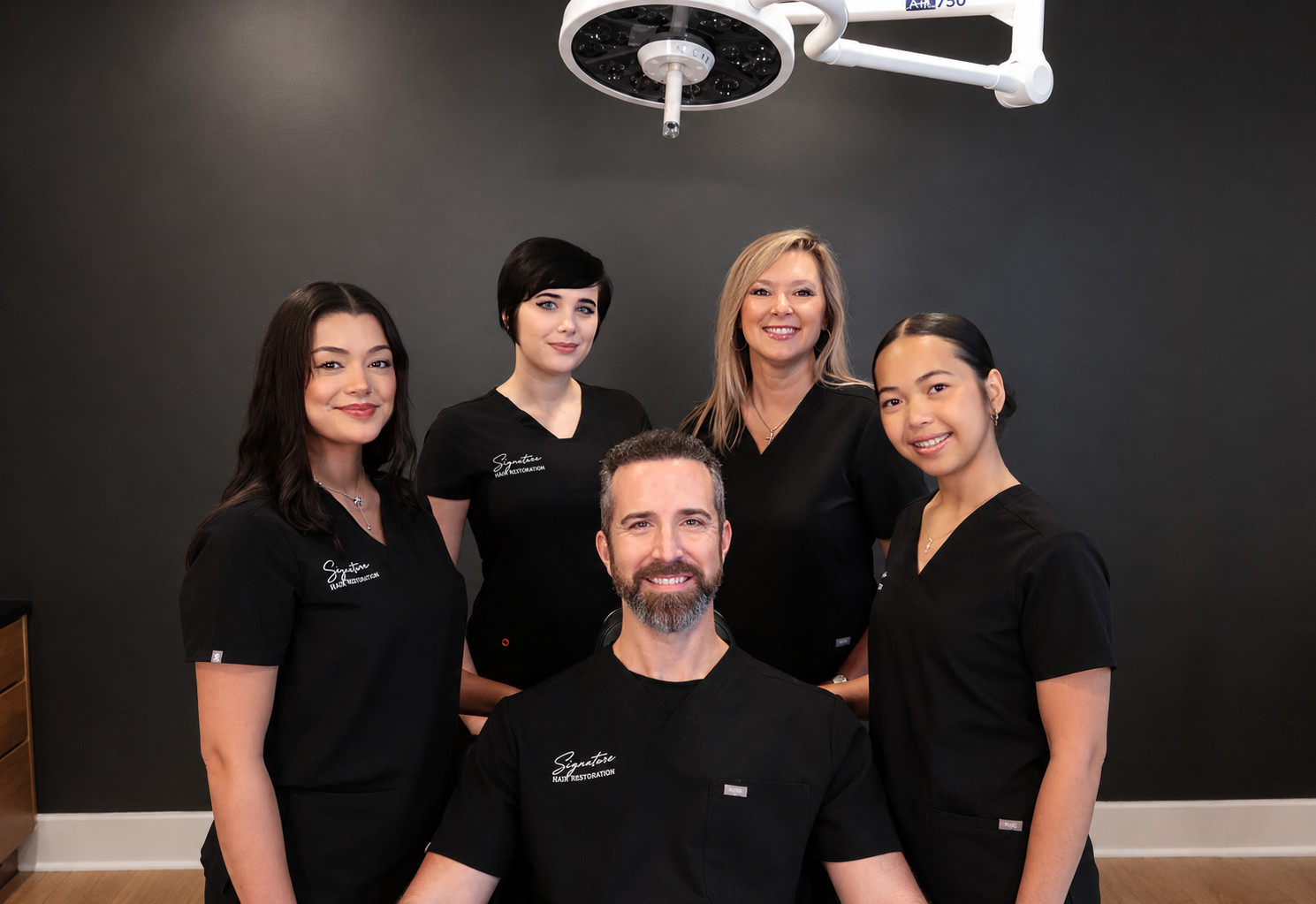
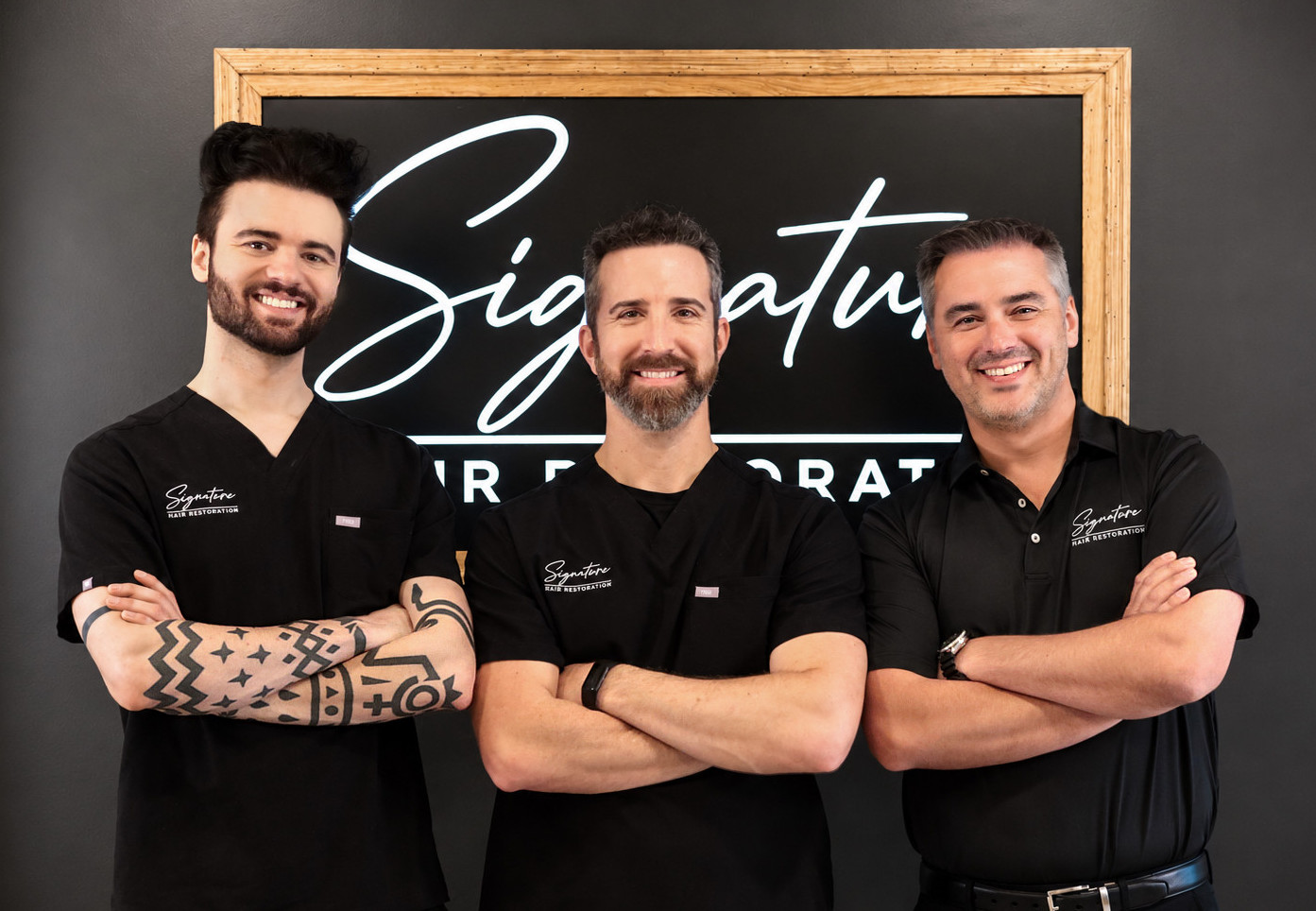
    Signature Hair Restoration team

    Why Does Signature Divide Large FUE Procedures Into Two Days?

    Our comfortable working range for a standard one-day FUE procedure is approximately 3,000 grafts or less, depending on the individual patient. When a restoration begins to exceed that range, we often prefer to divide the procedure into two planned surgical days. There are several reasons.

    1. Large Hair Transplants Involve More Than One Cosmetic Area

    Advanced hair loss often doesn’t involve one isolated bald spot.

    It may include:

    • The frontal hairline
    • Frontal forelock
    • Frontal scalp
    • Mid-scalp
    • Vertex transition
    • Crown

    We think about these as different cosmetic units.

    Each area has its own importance, growth direction, density requirements and impact on the patient’s appearance.

    A two-day procedure allows us to create a deliberate plan for each area instead of treating the scalp as one enormous recipient zone.

    Treating the Scalp in Cosmetic Units

    Consider a patient requiring approximately 4,000 grafts.

    Instead of attempting to address the entire scalp simultaneously, the procedure might be divided like this:

    Day 1 — Crown Restoration

    Approximately 2,000 grafts may be concentrated into the crown and surrounding transition area.

    The crown presents its own surgical challenges because the hairs naturally change direction and often form a whorl pattern.

    Grafts must be placed with careful attention to the patient’s existing growth pattern and the way the crown connects with the mid-scalp.
    Day 2 — Frontal Restoration

    Another approximately 2,000 grafts may then be concentrated into the frontal half of the scalp.

    This could include:

    • Hairline reconstruction
    • Frontal density
    • Frontal forelock
    • Transition into the mid-scalp

    For many patients, the frontal half of the scalp produces the greatest immediate cosmetic impact because it frames the face.

    Separating these treatment areas allows the surgical team to approach each day with a clearly defined objective.

    Why Not Simply Perform 4,000 or 5,000
    Grafts in One Day?

    Large single-day FUE procedures can be performed in selected patients. However, bigger is not automatically better. Hair transplantation is a labor-intensive microsurgical procedure. Each follicular unit must be extracted, inspected, preserved and then carefully placed into the recipient scalp.

    As procedure size increases, surgical duration increases as well.

    Published literature has specifically identified surgical duration, team organization, graft handling and physician fatigue as considerations during very large FUE procedures.

    At Signature, our preference is generally to keep each day’s graft count within a range where we believe our team can work efficiently and deliberately.

    For us, that number is approximately 3,000 grafts in one day, although every patient is different.

    When substantially more grafts are needed, dividing the procedure across two days allows us to maintain a focused workflow while treating multiple cosmetic units.

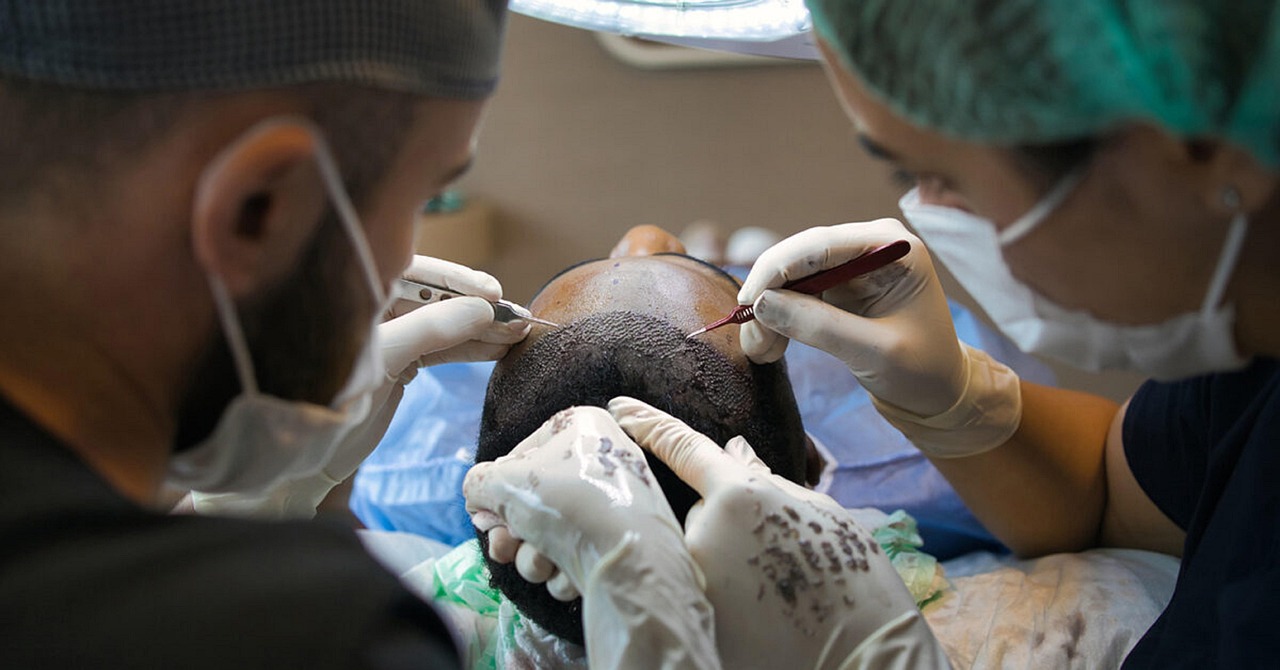
    Signature Hair Restoration clinical care

    Who Is a Candidate for Mega FUE?

    Mega FUE is primarily designed for patients with more advanced androgenetic hair loss and enough donor hair to support a larger restoration.

    This frequently includes patients within approximately:

    Norwood StageHair Loss Pattern
    Norwood VHair loss may extend throughout the frontal and mid-scalp with significant crown involvement.
    Norwood VIThe frontal and crown areas may have joined together, leaving a large area of thinning or bald scalp requiring restoration.
    Norwood VIIHair loss can involve nearly the entire top of the scalp, leaving a more limited permanent donor zone around the back and sides.

    Patients with Norwood VI and VII hair loss require particularly careful planning because the amount of scalp requiring coverage can become very large while the available donor supply remains finite.

    In these cases, the question isn’t simply:

    “How many grafts can we move?”

    The more important question is:

    “How should we use the available grafts to produce the greatest visual benefit now and over the patient’s lifetime?”

    The Most Important Limitation: Donor Supply

    Every hair-transplant patient has a finite donor supply.

    There is no unlimited reservoir of permanent hair.

    As hair loss becomes more advanced, the surface area requiring restoration increases while donor availability does not necessarily increase with it.

    This creates a supply-and-demand problem.

    For example, a patient with extensive Norwood VI or VII hair loss may want full native density restored across the entire top of the scalp.

    In many cases, there simply aren’t enough safely harvestable donor follicles to recreate the density the patient had before hair loss began.

    That means advanced hair restoration requires prioritization.

    We may need to determine:

    • Which areas matter most cosmetically?
    • How low should the hairline be?
    • How much density should be dedicated to the frontal scalp?
    • How many grafts should be reserved for the crown?
    • Is additional future hair loss likely?
    • Should donor hair be preserved for a future procedure?

    These decisions can be more important than the raw graft count itself.

    More Grafts Does Not Automatically Mean a Better Hair Transplant

    Large graft numbers are easy to advertise. But a successful advanced hair restoration isn’t a competition to see who can extract the most follicles. Overharvesting the donor area can produce visible thinning, patchiness and permanent depletion.

    Hair-transplant guidelines emphasize that the number of grafts that can safely be harvested varies according to factors including:

    • Donor-area size
    • Follicular-unit density
    • Hair density
    • Miniaturization
    • Head size
    • Skin characteristics
    • Technique
    • Patient age
    • Anticipated future procedures

    Published practice guidelines cite approximately 2,500 to 3,000 grafts as an average optimum upper limit for harvesting in one session without visible donor depletion, while also emphasizing that individual variation can be substantial.

    That is one reason Signature’s Mega FUE philosophy focuses on donor management rather than maximum extraction.

    Mega FUE for 4,000+ Graft Cases

    Many Mega FUE patients require somewhere around 4,000 or more grafts. For an appropriate patient, dividing those grafts across two days might allow us to address multiple regions of the scalp during one planned surgical experience.

    A hypothetical treatment plan could include:

    DayGraftsTreatment area
    Day 12,000 graftsCrown and posterior transition
    Day 22,000 graftsHairline, frontal scalp and frontal half

    Another patient might require:

    DayGraftsTreatment area
    Day 11,500 graftsCrown
    Day 22,000 graftsFrontal and mid-scalp

    Or a patient may require a different distribution entirely.

    There is no standard Mega FUE graft allocation.

    The plan is determined by the patient’s pattern of loss, donor supply, hair characteristics and cosmetic priorities.

    What About 5,000 or More Grafts?

    Some patients have donor characteristics that may support larger restorations. However, reaching a particular graft number should never be the primary objective.

    Before recommending a very large procedure, we need to determine whether the donor area can safely provide the required number of grafts. Hair-transplant literature repeatedly emphasizes careful donor evaluation in large FUE procedures because aggressive extraction can leave visible donor depletion.

    For some patients, 4,000+ grafts may be reasonable.

    For others, attempting to reach that number could compromise the donor area.

    And in patients with very advanced hair loss, multiple procedures separated over time may provide a more appropriate long-term strategy.

    The donor area determines what is possible—not the desired graft count.

    PRP treatment at Signature Hair Restoration

    Mega FUE for Norwood V Hair Loss

    Norwood V patients can sometimes be particularly good candidates for larger FUE restoration because substantial hair loss has occurred while a strong donor region may still remain.

    Treatment may involve restoring:

    • Hairline
    • Frontal scalp
    • Mid-scalp
    • Crown

    The distribution of grafts is customized according to which areas will create the greatest cosmetic benefit.

    Published surgical literature has described approximately 4,000–5,000 graft treatment plans for selected Norwood V patients, although graft requirements and safe donor availability vary considerably between individuals.

    Mega FUE for Norwood VI and VII Hair Loss

    Norwood VI and VII patients require a different conversation.

    At this level of hair loss, the recipient area can become extremely large.

    Even patients with good donor density may not have enough donor follicles to recreate high density everywhere.

    Our objective therefore becomes strategic coverage.

    We may recommend prioritizing the frontal scalp because hairline framing and frontal density frequently provide the greatest visual impact.

    Some patients may ultimately require more than one surgical stage to accomplish their long-term goals.

    Crown coverage may receive a different graft allocation depending on:

    • Crown size
    • Available donor supply
    • Hair caliber
    • Hair-to-skin color contrast
    • Patient hairstyle
    • Age
    • Future hair-loss expectations
    • Patient priorities

    Published literature describing transplantation for Norwood VI and VII hair loss likewise emphasizes detailed donor and recipient planning and, in selected cases, multi-stage treatment.

    The Crown Requires More Grafts Than
    Many Patients Expect

    The crown can consume a significant amount of donor hair. Because it is a broad three-dimensional area with a changing direction of growth, achieving the visual appearance of density can require substantial graft allocation. This creates an important decision for advanced hair-loss patients.

    Should thousands of limited donor follicles be dedicated to the crown?

    Or would some of those grafts create greater cosmetic impact in the frontal scalp?

    There isn’t one correct answer.

    For some patients, crown restoration is a major priority.

    For others, preserving donor hair and concentrating density toward the front produces a better overall appearance.

    Mega FUE gives us the ability to plan these areas together rather than making isolated decisions.

    Hairline Design Matters Even More in
    Advanced Hair Loss

    An aggressive low hairline requires more grafts.

    For a patient with extensive hair loss, every graft dedicated to lowering the hairline is a graft that cannot be used elsewhere.

    That is why advanced hair-loss patients often benefit from a mature, conservative and age-appropriate hairline.

    Our objective is to frame the face while preserving enough donor supply to address the scalp behind it.

    A natural-looking hairline with adequate density usually creates a better long-term result than an excessively low hairline that exhausts donor resources.

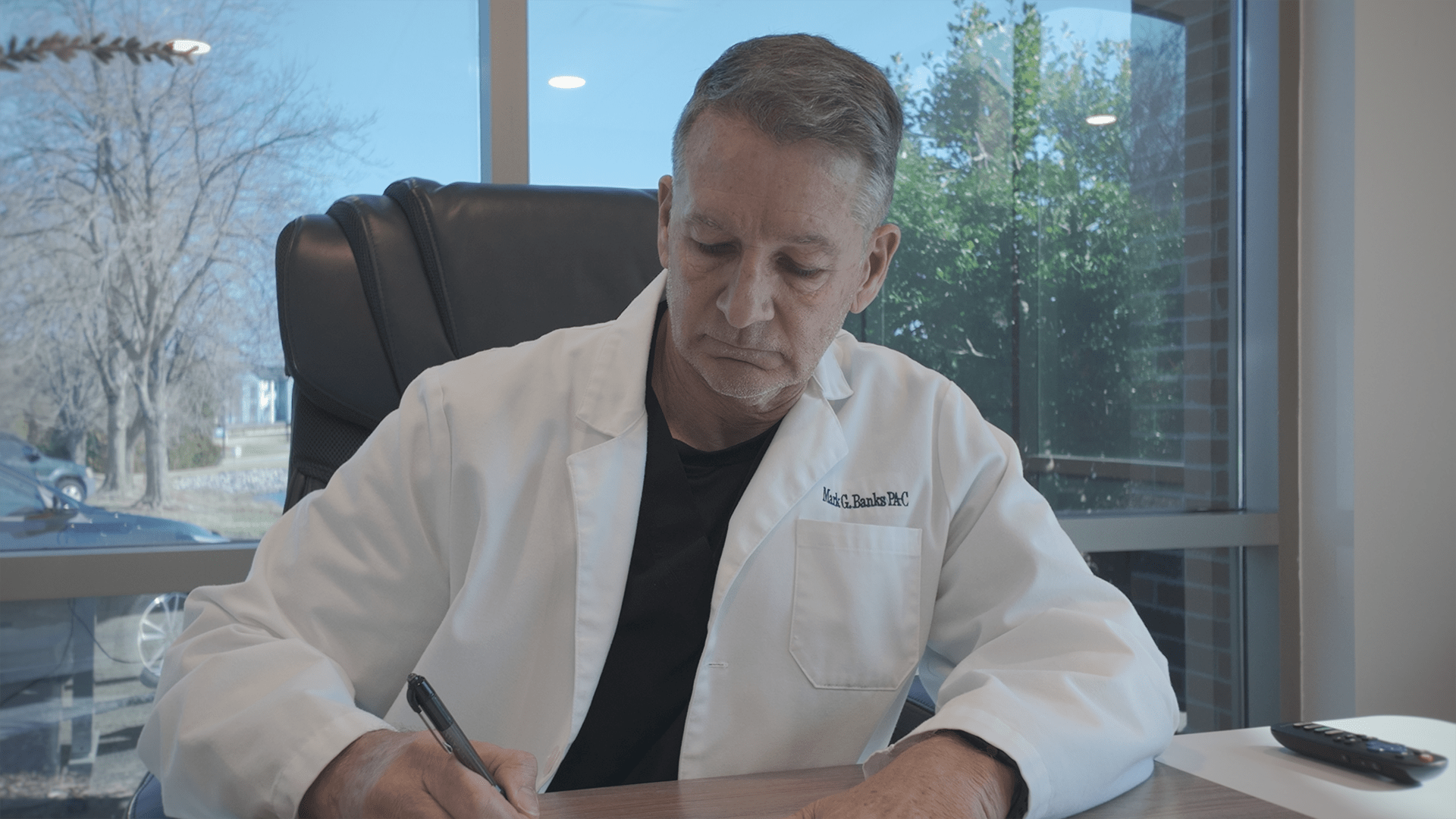
    Mark Banks preparing a hair restoration plan

    How We Determine Your Mega FUE Graft Number

    Graft recommendations are based on multiple factors.

    Donor Density

    How many follicular units are available within the safe donor region?

    Hair Caliber

    Coarser hair generally creates more visual coverage than very fine hair.

    Hair Texture

    Wave and curl can influence the appearance of density and scalp coverage.

    Hair-to-Skin Contrast

    Lower contrast between hair and scalp can sometimes make a given density appear fuller.

    Size of the Recipient Area

    A Norwood V patient and a Norwood VII patient may have dramatically different areas requiring restoration.

    Existing Hair

    Residual native hair can contribute substantially to the final visual result.

    Future Hair Loss

    We must consider what the scalp may look like years after the transplant—not just immediately after surgery.

    Patient Priorities

    Some patients prioritize their hairline and frontal scalp.

    Others are particularly bothered by their crown.

    The surgical plan should reflect those priorities while remaining realistic about donor supply.

    What Happens During a Two-Day
    Mega FUE?

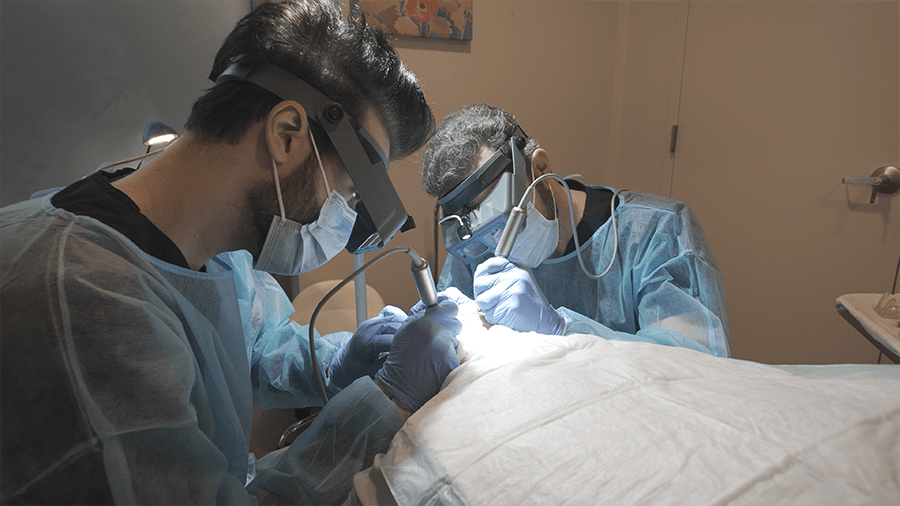
    Your exact treatment plan will be reviewed before surgery. Generally, each day focuses on a planned portion of the overall restoration. Follicular units are individually harvested from the donor area using FUE.

    The grafts are then prepared and placed into recipient sites designed according to:

    • Hair direction
    • Angle
    • Density
    • Existing hair
    • Cosmetic unit
    • Long-term treatment plan

    After Day 1, the patient returns for the second portion of the planned restoration.

    Day 2 addresses the remaining cosmetic unit or units according to the surgical plan.

    The result is still one comprehensive restoration—it is simply completed across two organized surgical days.

    Why Surgical Efficiency Matters

    FUE is a technically demanding and time-intensive procedure.

    Hair restoration consultation

    Very large sessions require prolonged extraction, graft processing and implantation.

    Published literature has discussed surgical-team fatigue, extended operative time and graft-preservation requirements as considerations in FUE megasessions.

    Signature’s two-day protocol allows our surgical team to work within a range that is comfortable for our practice while approaching each portion of the restoration with a defined objective.

    We do not claim that dividing a case across two days inherently guarantees better graft survival.

    Rather, it is how our team prefers to organize larger procedures so we can maintain an efficient and deliberate surgical workflow.

    How Long Does a Mega FUE Result
    Take to Grow?

    Mega FUE follows the same general biological growth process as other hair transplants. After surgery, transplanted hairs commonly shed during the early postoperative period while the follicles remain beneath the skin. New hair then gradually begins to grow over the following months. Density, length and hair characteristics continue developing as the transplanted follicles mature. Large restorations can create significant changes, but results develop gradually rather than immediately.

    Will I Need Another Hair Transplant Later?

    Possibly.

    A 4,000-graft procedure does not necessarily mean a patient’s hair-restoration journey is complete.

    Native androgenetic hair loss can continue over time.

    Patients with advanced hair loss may also intentionally stage their restoration so donor resources are preserved.

    This is one reason long-term planning matters.

    The objective should not simply be to maximize the first procedure.

    It should be to use the patient’s donor supply intelligently over a lifetime.

    Signature Hair Restoration clinical care

    Frequently Asked Questions

    What does Mega FUE mean?

    At Signature Hair Restoration, Mega FUE refers to our planned two-day FUE approach for selected patients who generally require approximately 3,000 or more grafts.

    The term “megasession” is used differently throughout the hair-transplant industry, so our definition refers specifically to Signature’s protocol.

    Why does Signature use two days?

    For larger procedures, we prefer to divide the restoration into planned cosmetic units.

    One day might focus primarily on the crown while another focuses on the frontal half of the scalp.

    This helps our team organize a large restoration into two focused surgical days.

    How many grafts can you perform in one day?

    Our comfortable working range is generally up to approximately 3,000 grafts in one day.

    The appropriate number depends on donor characteristics, surgical complexity and the individual patient.

    How many grafts can you perform over two days?

    There is no universal number.

    Many Mega FUE cases may involve 3,000–4,000+ grafts, while selected patients may require more.

    The limiting factor is ultimately the patient’s safe donor supply.

    Is 4,000 grafts a lot?

    Yes.

    A 4,000-follicular-unit transplant represents a substantial redistribution of donor hair and requires careful donor assessment and recipient planning.

    Can I get 5,000 grafts?

    Possibly—but the question shouldn’t be whether 5,000 grafts can physically be extracted.

    The question is whether your donor area can safely supply that number without compromising its appearance or your long-term options.

    Can Mega FUE restore a Norwood VI or VII?

    It can create significant cosmetic restoration in selected patients, but complete native density across an extensively bald scalp is generally unrealistic because donor hair is finite.

    The available grafts must be strategically distributed.

    Is the front or crown more important?

    That depends on the patient.

    The frontal scalp frequently creates a greater impact because it frames the face, but crown loss can also be a major concern.

    We discuss both areas when creating the overall treatment plan.

    Does doing the procedure over two days improve graft survival?

    We don’t make that promise.

    Our two-day approach is designed around workflow, treatment of separate cosmetic units and keeping each surgical day within a range our team is comfortable performing.

    Graft survival depends on numerous factors, including harvesting, handling, storage, implantation, patient factors and postoperative care.

    Is Mega FUE safe for everyone?

    No.

    Large FUE procedures require sufficient donor density and appropriate overall candidacy.

    Patients with limited donor supply, significant donor miniaturization or medical factors affecting surgical candidacy may require a smaller procedure, staged procedures or a different treatment plan.

    Mega FUE Is About Planning—Not
    Chasing a Graft Number

    Advanced hair loss presents a simple mathematical problem:

    A large amount of scalp may need coverage, but donor hair is limited.

    The solution isn’t necessarily extracting more.

    It is using the available hair intelligently.

    Signature Mega FUE allows us to approach larger restorations as a planned two-day procedure, often treating different cosmetic areas on each day.

    For the right patient, this may allow us to address 3,000, 4,000 or more grafts while maintaining a deliberate strategy for the hairline, frontal scalp, mid-scalp, crown and donor region.

    The most important number isn’t the largest graft count we can advertise.

    It’s the number of grafts your scalp can safely provide and your restoration actually needs.

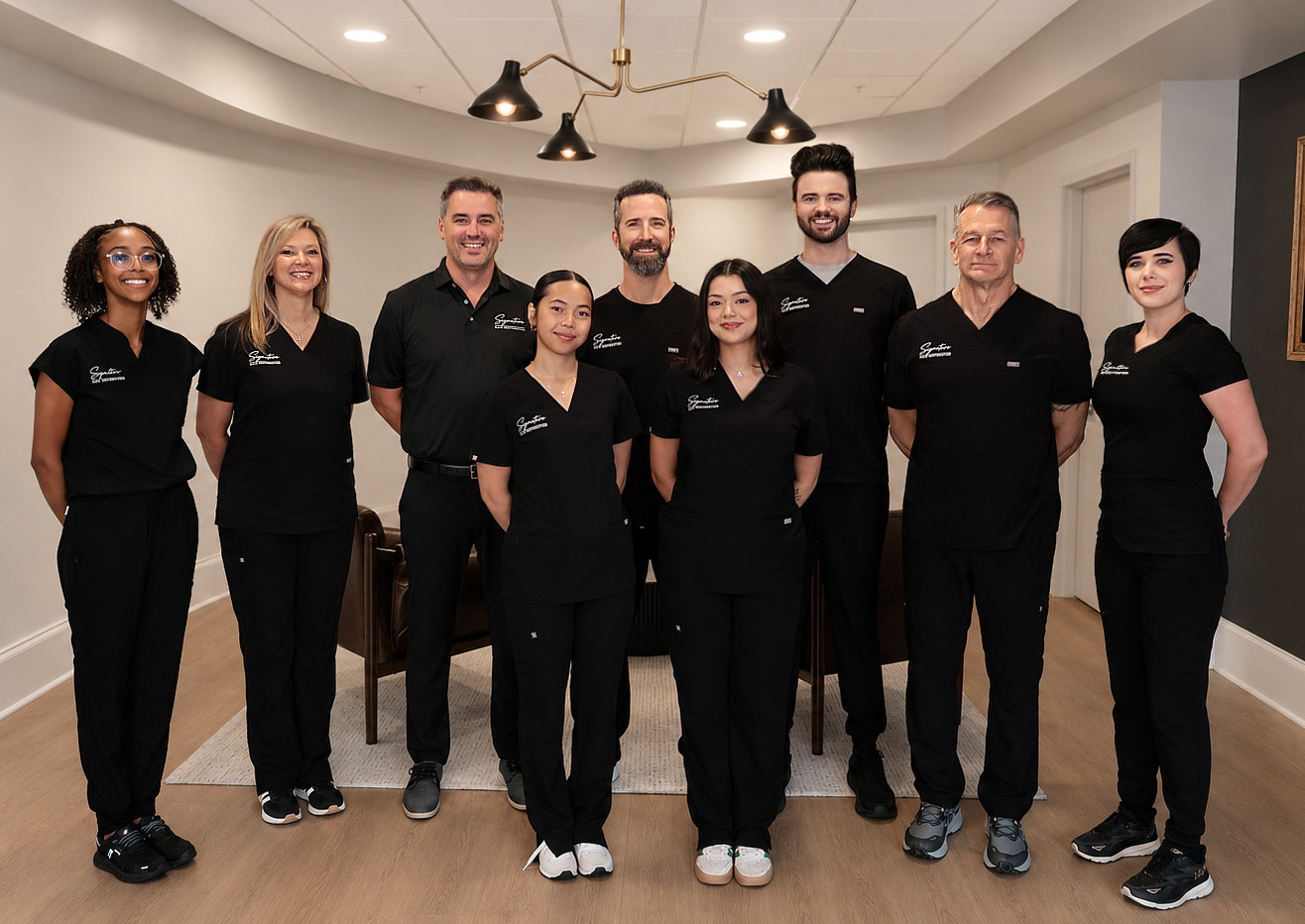
    Signature Hair Restoration team

    Schedule a consultation with Signature Hair Restoration to find out whether Mega FUE is appropriate for your hair-loss pattern and donor supply.

    Medical References

    1. Gabel S. Megasessions: Surgical Indications and Technical Perspectives. Facial Plastic Surgery Clinics of North America. 2013. Reviews patient selection, technical considerations, graft survival and the requirements of large hair-transplant procedures.
    2. Hair Transplant Practice Guidelines. Journal of Cutaneous and Aesthetic Surgery. 2021. Provides guidance regarding donor assessment, follicular unit excision, donor miniaturization, overharvesting and graft-harvesting limits.
    3. Gan YY, Du LJ, Hong WJ, Hu ZQ, Miao Y. Theoretical basis and clinical practice for FUE megasession hair transplantation in the treatment of large area androgenic alopecia. Journal of Cosmetic Dermatology. Discusses the challenges associated with prolonged FUE megasessions and graft preservation.
    4. Donor Harvesting: Follicular Unit Excision. Journal of Cutaneous and Aesthetic Surgery. Reviews FUE donor harvesting, large sessions, surgeon fatigue, patient positioning and techniques intended to reduce donor complications.
    5. Combination Grafting of Scalp and Body Hair to Enhance the Visual Density of Hair Transplant and Coverage of Higher Grade of Baldness. Journal of Cutaneous and Aesthetic Surgery. Describes surgical planning for advanced Norwood V–VII hair loss, including multi-day and staged transplantation.
    6. Complications in Follicular Unit Excision Hair Transplantation: Current Evidence and Practical Approaches. Reviews complications associated with FUE, including donor overharvesting and considerations associated with larger procedures.

    Medical information on this page is intended for educational purposes and does not replace an individualized medical or surgical evaluation. Graft numbers and treatment plans vary substantially based on donor density, hair characteristics, hair-loss pattern, medical history and long-term restoration goals.

    Excellent
    5.0
    Based on +30 reviews
    Regina Templeton
    Regina Templeton
    1 week ago
    I have been a client of Greg Koher at Signature Hair Restoration for approximately four years, and my experience has been exceptional. Greg is highly knowledgeable, professional, and genuinely invested in helping his clients achieve the best possible results. He takes the time to listen, answer questions, and develop a personalized approach that fits individual needs and goals. Throughout the years, he has consistently provided outstanding service, support, and guidance.

    Greg has always made me feel like the best version of myself. His expertise, encouragement, and genuine care have helped me regain confidence and feel great about my appearance. The entire team at Signature Hair Restoration is welcoming, attentive, and dedicated to providing an outstanding experience.

    I am extremely grateful and would highly recommend Greg and Signature Hair Restoration to anyone considering hair restoration. Thank you for all you have done over the past four years! — Regina Templeton
    Seth Goodhart
    Seth Goodhart
    1 week ago
    Corey and the team were so incredibly helpful throughout the entire process. Corey gave me his personal cell that I could text, call or FaceTime anytime. He was very responsive about the procedure and setting up my appointment. The procedure itself was super comfortable and I got great results. I'm soon due for another transplant and will absolutely be going back to Corey and the gang. Thank you and keep up the good work!!
    Esmeralda Serrano
    Esmeralda Serrano
    3 weeks ago
    The staff are great and having PRP services here, I have been seeing growth with my second time coming in doing it. Everyone has been so great with me.
    Stan Sawyer
    Stan Sawyer
    3 weeks ago
    Great Dr's and care A+
    Bett T
    Bett T
    3 weeks ago
    Very satisfied with how efficient and prompt these nice folks are. Refreshing in these days!
    Fabian Dunn
    Fabian Dunn
    3 weeks ago
    Had a great experience. The staff is amazing. Very attentive on getting things done to help your progress. Love my results. Highly recommended.
    Christian Scott
    Christian Scott
    3 weeks ago
    I'm 6 months in and my hair is looking amazing! The staff and the process has been simple and pleasant. Highly recommend them.
    Jason Wilkins
    Jason Wilkins
    1 month ago
    This core team treated me when they were at a previous office, and the experience went very well. Sure it will be the same here. Customer service has started off great.
    Jason Welch
    Jason Welch
    1 month ago
    Top notch care. Friendly staff. I would go to them again. They did a good job on my hair.