Female Hair Transplant

    Hair Restoration Designed Specifically for Women

    Hair loss in women can look very different from hair loss in men.

    Some women experience a gradually widening part. Others notice decreased density through the frontal or central scalp. Some lose hair around the temples or hairline, while others develop permanent areas of hair loss from traction, surgery, injury or other causes.

    For properly selected patients, a female hair transplant can restore permanent hair to areas where density has been lost.

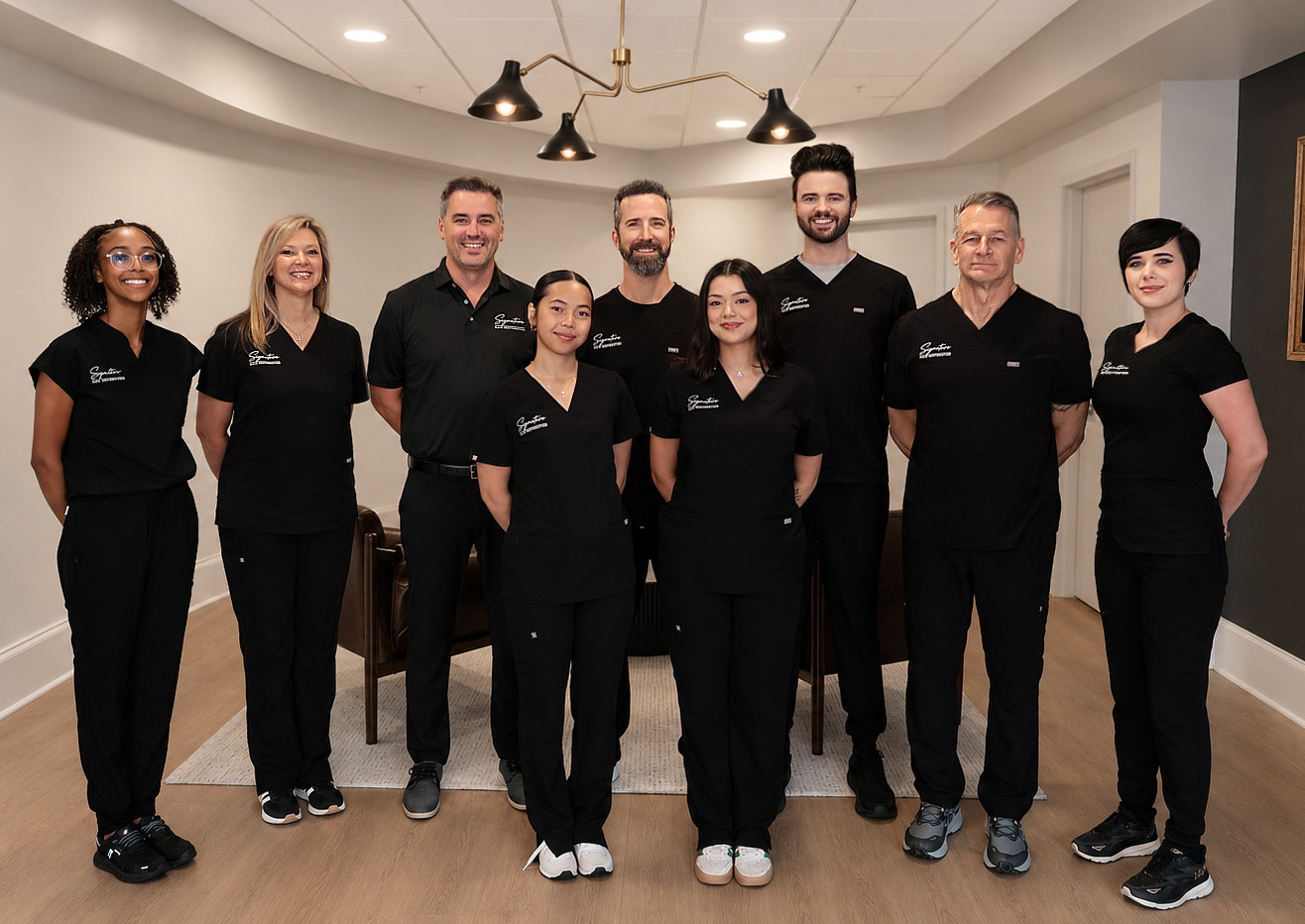
    Signature Hair Restoration team

    But successful female hair restoration begins with something even more important than the transplant itself:

    Determining why the hair is thinning and whether hair transplantation is actually the right treatment.

    At Signature Hair Restoration, we take a conservative approach to female hair transplantation. We evaluate the recipient area, donor density, pattern and stability of hair loss, existing hair and treatment history before recommending surgery.

    Not every woman experiencing hair loss is a candidate—and in some cases, medical treatment should come before transplantation.

    Why Do Women Lose Their Hair?

    There are many potential causes of hair loss in women.

    One of the most common is female pattern hair loss, also called female pattern alopecia. It typically causes progressive miniaturization of hair follicles and decreasing density over the frontal, central or upper scalp.

    Unlike the classic pattern seen in many men, women frequently maintain much of their frontal hairline while experiencing increasing thinning behind it.

    Because several different conditions can produce similar-looking hair loss, diagnosis matters before surgery is considered.

    Other causes of female hair loss may include:

    • Traction alopecia
    • Telogen effluvium
    • Alopecia areata
    • Scarring alopecias
    • Hormonal changes
    • Nutritional deficiencies
    • Thyroid disorders
    • Previous surgery or injury
    • Genetic hair thinning
    • Certain medications or medical conditions

    A hair transplant relocates follicles. It does not correct every underlying cause of hair loss.

    Can Women Get Hair Transplants?

    Women can achieve excellent results from hair transplantation when they have:

    • A clearly defined area requiring restoration
    • Adequate healthy donor hair
    • A stable donor region
    • A diagnosis that is appropriate for transplantation
    • Realistic expectations about achievable density

    Absolutely.

    Female hair transplantation can be particularly effective when there is a strong donor area combined with localized or patterned hair loss.

    The American Academy of Dermatology recognizes hair transplantation as a possible treatment for some women with female pattern hair loss, while noting that women with sparse hair throughout the scalp may not have enough healthy donor hair for transplantation.

    Who Is a Good Candidate for a
    Female Hair Transplant?

    The ideal female hair transplant patient generally has good donor density in the back and sides of the scalp and a clearly identifiable area that needs restoration.

    Examples may include women with:

    ConditionDescription
    Frontal Hair Thinning

    Some women maintain an intact hairline but develop significant thinning immediately behind it.

    Carefully adding follicular units to this area can increase the visual density of the frontal scalp.

    A Widening Part

    Female pattern hair loss commonly produces thinning through the central scalp and widening of the part.

    When the donor area remains sufficiently strong, transplantation may be used to reinforce selected areas along the part.

    Temporal Recession

    Women may lose density around the temples for several different reasons.

    When that loss is permanent and the underlying condition is stable, transplantation can potentially rebuild the temporal areas and restore balance to the hairline.

    A Naturally High Hairline

    Some women have always had a naturally high hairline or larger forehead and want to create a lower or more rounded feminine hairline.

    Hair transplantation can sometimes be used for hairline advancement or hairline reshaping, provided the patient has appropriate donor density and understands the graft requirements.

    Traction Alopecia

    Long-term tension from braids, extensions, weaves and other hairstyles can permanently damage follicles.

    Selected patients with stable traction alopecia may be candidates for transplantation depending on the amount of scar tissue, size of the affected area and available donor supply.

    Hair Loss From Scars or Surgery

    Hair transplantation can sometimes be used to camouflage scars from previous facial or scalp surgery, trauma or other procedures.

    Scar characteristics must be carefully evaluated because graft growth in scar tissue can be less predictable than growth in healthy scalp.

    The Most Important Question: Is the
    Donor Hair Stable?

    Hair transplantation works because healthy follicles are moved from one area of the scalp to another.

    That means the quality of the donor area is fundamental.

    In many male patients, the hair along the back and sides of the scalp remains substantially stronger than hair on the top.

    Women can be different.

    Female pattern hair loss sometimes produces more diffuse thinning, meaning that miniaturization may also affect areas that would otherwise be considered donor hair.

    If the donor hair itself is unstable, moving those follicles does not solve the underlying problem.

    This is why we carefully evaluate:

    • Donor density
    • Hair caliber
    • Evidence of miniaturization
    • Diffuse thinning
    • Long-term donor stability
    • Available follicular supply

    A patient may have significant hair loss on top and still not be a good transplant candidate if the donor region is also significantly affected.

    Diffuse Hair Loss and Female
    Hair Transplantation

    This is one of the most important differences between evaluating men and women for hair transplantation.

    A woman may look at an area of thin hair and understandably think:

    “Why not just put more grafts there?”

    Unfortunately, transplantation is not always that simple.

    If thinning is occurring throughout both the recipient and donor areas, there may not be a sufficiently stable supply of hair to move.

    Diffuse unpatterned hair loss involving the donor region is considered a poor indication for transplantation because there is no reliably stable donor population.

    For these patients, medical management or other cosmetic solutions may be more appropriate than surgery.

    Female Pattern Hair Loss: Medical
    Treatment or Hair Transplant?

    Often, the answer is both—but not necessarily at the same time.

    Female pattern hair loss is generally progressive. Hair transplantation can add follicles to selected areas, but it does not stop untreated native hairs from continuing to miniaturize.

    Depending on the patient and diagnosis, treatment may include:

    • Topical minoxidil
    • Oral minoxidil when medically appropriate
    • Spironolactone or other prescription therapy when appropriate
    • Platelet-rich plasma (PRP)
    • Other physician-directed treatments

    For this reason, many women benefit from medical treatment before or alongside surgical restoration.

    Topical minoxidil is one of the best-established treatments for female pattern hair loss and is recommended by the American Academy of Dermatology.

    Other medications may be used off-label depending on the patient’s age, medical history, diagnosis and pregnancy considerations.

    The goal of medical treatment is generally to preserve and strengthen the native hair that remains, while surgery can strategically add permanent follicles where additional density is needed.

    The Signature Approach to Female
    Hair Transplant Candidacy

    We think about female transplantation in three broad groups.

    1. Strong Surgical Candidate

    These patients generally have:

    • A clearly defined area of thinning or recession
    • Strong donor density
    • Relatively stable hair loss
    • Little or no significant donor miniaturization
    • Realistic expectations
    • A diagnosis appropriate for transplantation

    Examples could include isolated frontal thinning, temporal recession, a high hairline or selected cases of stable female pattern hair loss.

    These patients may achieve a meaningful improvement with transplantation.
    2. Potential Candidate — Medical Optimization First

    Some women have areas that could eventually benefit from transplantation, but their existing hair is actively thinning or their pattern has not yet become sufficiently stable.

    In these patients, we may recommend medical therapy before making a surgical decision.

    The goal is to determine how much native hair can be preserved and whether the pattern of hair loss becomes more predictable.

    After an appropriate period of treatment, we can reevaluate the scalp and determine whether transplantation should be added to the treatment plan.

    3. Poor Surgical Candidate

    Some women simply do not have enough stable donor hair to support transplantation.

    This may occur when significant thinning extends throughout the scalp, including the donor region.

    Other conditions—such as active alopecia areata, active inflammatory scarring alopecia or ongoing significant telogen shedding—may also make transplantation inappropriate until the underlying condition has been properly evaluated and treated.

    In these situations, we may recommend against surgery.

    A hair transplant should only be performed when moving donor follicles has a reasonable chance of creating a meaningful and lasting cosmetic improvement.

    FUE Hair Transplant for Women

    Signature Hair Restoration uses Follicular Unit Excision (FUE) for many female
    hair restoration procedures.

    FUE involves removing individual follicular units from the donor area and carefully transplanting them into areas requiring additional density.

    One of the advantages of FUE is that it does not require removal of a linear strip of scalp.

    However, donor access must still be planned carefully.

    Depending on the size of the procedure, some women may require shaving of portions of the donor area. In other cases, the donor hair can potentially be prepared in a way that allows longer surrounding hair to camouflage the treated area.

    Your surgical plan will depend on:

    • Number of grafts required
    • Hair length
    • Donor density
    • Location of the transplant
    • Hairstyle
    • Individual goals

    We discuss donor preparation before surgery so patients understand what to expect.

    Creating a Natural Female Hairline

    A female hairline should not simply be a male hairline transplanted onto a woman.

    Hairline shape, temple design, density and directional patterns all need to complement the patient’s facial proportions and existing hair.

    Women commonly have softer and more rounded frontal hairlines than men, although there is substantial individual variation.

    The objective is for the transplanted hairline to look like it belongs to the patient—not like it was surgically created.

    When performing hairline restoration, we pay particular attention to:

    • Facial proportions
    • Existing hairline shape
    • Temporal points
    • Direction and angle of growth
    • Hair caliber
    • Placement of finer follicular units along the leading edge
    • Long-term donor supply

    Hair Transplant for a Widening
    Female Part

    A widening part is one of the most recognizable presentations of female pattern hair loss.

    Adding grafts along the part can increase visual density, but transplantation between existing hairs requires careful planning.

    The goal is to add follicles without unnecessarily damaging the native hair that remains.

    Patients should also understand that a transplant does not prevent neighboring native hairs from undergoing future miniaturization.

    For this reason, maintaining the surrounding hair can be just as important as the transplant itself.

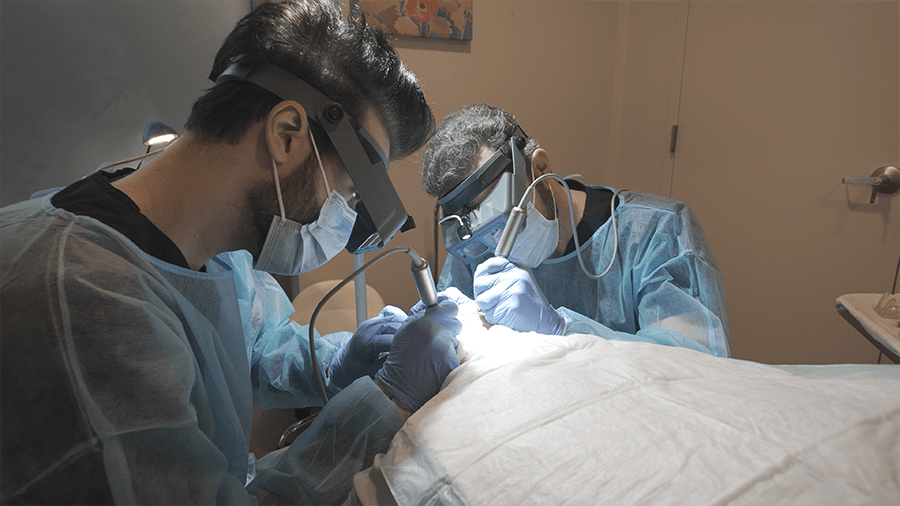
    Signature Hair Restoration surgical team

    Female Hairline Lowering With
    Hair Transplantation

    Hair transplantation can also be considered for women who do not necessarily have significant hair loss but naturally have a high frontal hairline.

    The amount the hairline can realistically be lowered depends partly on how many grafts are available and how much density is required.

    Hairline design should also account for long-term appearance rather than simply creating the lowest possible hairline.

    Follicles can be placed below the existing hairline to:

    • Reduce the apparent height of the forehead
    • Soften the frontal contour
    • Round the hairline
    • Fill temporal recession
    • Adjust asymmetry

    How Many Grafts Does a Female
    Hair Transplant Require?

    There is no universal graft number.

    Our recommendations are based on:

    • Size of the treatment area
    • Existing density
    • Donor density
    • Hair caliber
    • Hair texture
    • Desired improvement
    • Long-term hair loss pattern

    A small area of temporal recession may require considerably fewer grafts than diffuse thinning involving the frontal and central scalp.

    With female transplantation, attempting to cover too large an area with too few grafts can result in an underwhelming cosmetic change.

    We therefore prioritize the areas where transplantation is most likely to produce the greatest visual improvement.

    Can Women Have Hair Transplants Without
    Shaving Their Entire Head?

    Hair restoration consultation with a doctor

    In many cases, yes.

    Female patients generally do not need to shave the entire scalp.

    Depending on the procedure, we may be able to prepare only portions of the donor area while leaving surrounding hair long enough to help conceal the extraction sites.

    The recipient area may also be transplanted between existing hairs without shaving the entire top of the scalp.

    The exact approach depends on graft count, density, hair length and the patient’s surgical plan.

    Will I Lose My Existing Hair After a Female Hair Transplant?

    Temporary shedding of existing hair can occur after transplantation.

    This is sometimes referred to as shock loss.

    Women undergoing transplantation into areas containing many miniaturized native hairs may be more susceptible to noticeable temporary thinning.

    Most healthy hairs recover, but severely miniaturized follicles may not always return.

    This possibility is another reason we evaluate native hair carefully and, when appropriate, recommend medical stabilization before surgery.

    When Will I See My Female Hair
    Transplant Results?

    Hair transplantation develops gradually.

    Many transplanted hairs initially shed after surgery while the transplanted follicles remain beneath the skin.

    New growth then begins gradually over the following months.

    Density and hair characteristics continue to mature as the hair grows longer.

    The final cosmetic result takes time, particularly in women with longer hairstyles where additional hair length contributes significantly to the appearance of density.

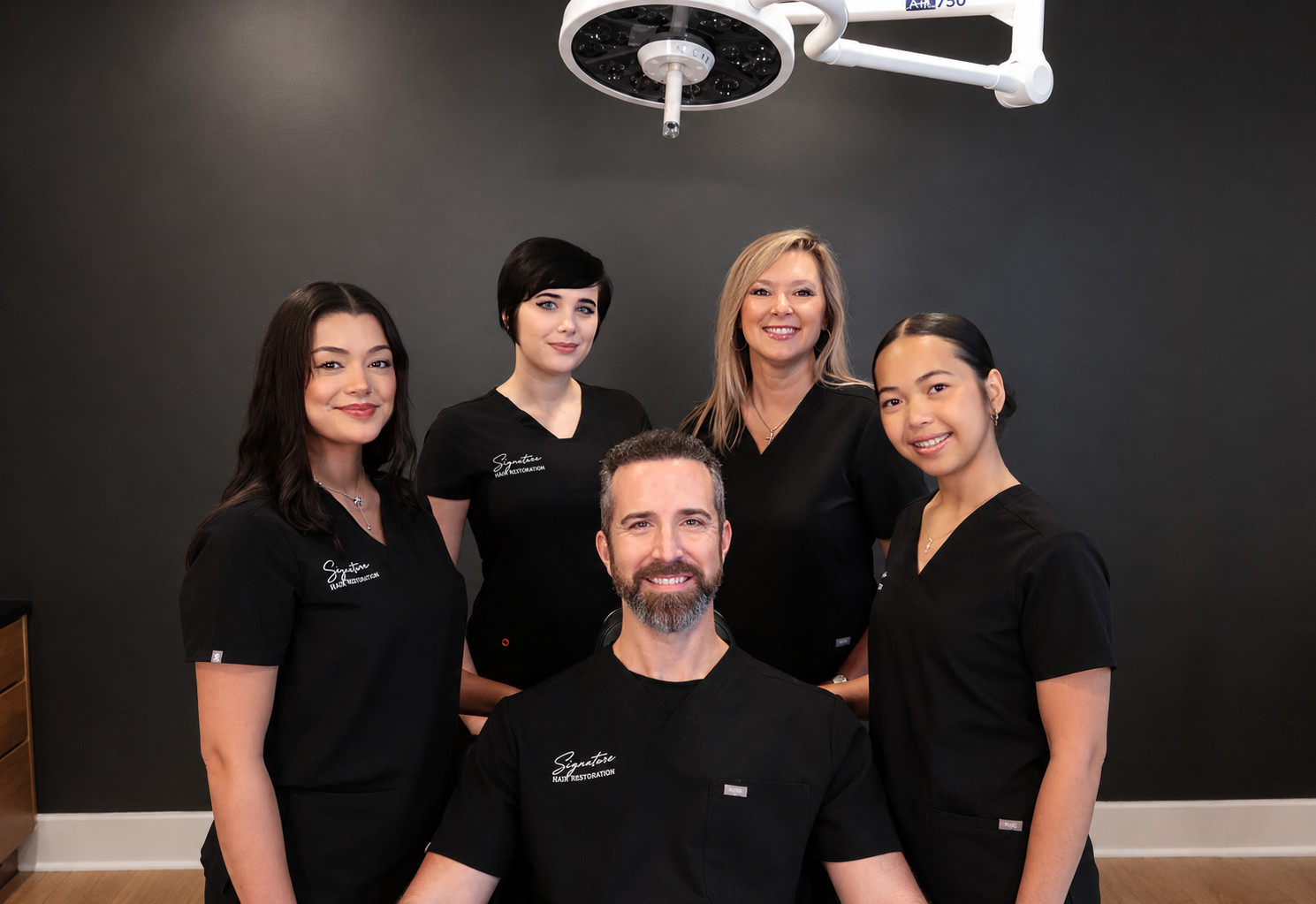
    Signature Hair Restoration team

    Frequently Asked Questions

    Are women good candidates for hair transplants?

    Some women are excellent candidates.

    The strongest candidates generally have a localized or patterned area of hair loss combined with a healthy, stable donor region.

    Women with significant diffuse thinning throughout both the top and donor areas may not have enough stable donor hair for transplantation.

    Can a hair transplant make female hair thicker?

    A transplant cannot make existing follicles produce additional hairs, but it can add additional healthy follicular units to selected areas and thereby increase cosmetic density.

    Can you transplant hair into a thinning part?

    Yes, in selected patients.

    Grafts can be carefully placed between existing follicles along a widening part, provided the donor area is appropriate and the underlying hair loss has been properly evaluated.

    Can you lower a woman’s hairline with FUE?

    Yes.

    Hair transplantation can be used to lower or reshape a naturally high hairline when donor supply and facial proportions make the procedure appropriate.

    Do women have to shave their head for FUE?

    Usually not the entire head.

    Some donor hair may need to be trimmed or shaved to allow individual follicles to be harvested. Longer surrounding hair can often help conceal the donor area.

    Can a woman with diffuse thinning have a transplant?

    Sometimes, but diffuse thinning requires particularly careful evaluation.

    If the donor region is also significantly miniaturized, transplantation may not be recommended.

    Should I try minoxidil before having a hair transplant?

    For many women with female pattern hair loss or active thinning, medical treatment can be an important part of the overall strategy.

    Whether treatment should come before surgery depends on the diagnosis, severity and stability of the hair loss.

    Will my other hair keep thinning after the transplant?

    It can.

    Transplanted follicles and native follicles are different populations. Hair transplantation does not stop progression of female pattern hair loss in the surrounding native hair.

    That is why long-term hair-loss management can remain important after surgery.

    Female Hair Restoration Should Start
    With the Right Diagnosis

    If you’re a woman experiencing hair loss, the question isn’t simply whether hair transplantation is possible.

    The more important questions are:

    • Why are you losing hair?
    • Is the donor hair strong enough to transplant?
    • Is your hair loss stable?
    • Would medical treatment, surgery or a combination of the two produce the best result?

    At Signature Hair Restoration, we’ll evaluate your hair loss pattern, donor density, existing hair and restoration goals before recommending treatment.

    Some women are excellent candidates for hair transplantation.

    Some should begin with medical treatment.

    And some are better served by avoiding transplantation altogether.

    Our responsibility is to help determine which category you fall into.

    Schedule a consultation with Signature Hair Restoration to find out whether female hair transplantation may be right for you.

    Medical References

    1. American Academy of Dermatology Association. Thinning hair and hair loss: Could it be female pattern hair loss? Reviews female pattern hair loss, diagnosis, medical therapy and the role of hair transplantation in selected women.
    2. Bhat YJ, Saqib NU, Latif I, Hassan I. Female Pattern Hair Loss—An Update. Indian Dermatology Online Journal. Reviews the presentation, diagnosis and treatment of female pattern hair loss.
    3. Ramos PM, Miot HA. Female Pattern Hair Loss: a clinical and pathophysiological review. Anais Brasileiros de Dermatologia. Reviews patterns, diagnosis and management of female pattern hair loss.
    4. Iorizzo M, Tosti A. Female pattern hair loss: current perspectives. International Journal of Women’s Health. Discusses medical treatment and limitations of transplantation in women with diffuse donor involvement.
    5. Is Every Patient of Hair Loss a Candidate for Hair Transplant?—Deciding Surgical Candidacy in Pattern Hair Loss. Reviews hair-transplant patient selection, including the importance of identifying diffuse unpatterned alopecia and unstable donor regions.
    6. Hair Transplant Practice Guidelines. Journal of Cutaneous and Aesthetic Surgery. Includes recommendations regarding examination, counseling, donor assessment and surgical planning for female hair transplantation.

    Medical information on this page is intended for educational purposes and does not replace an individualized medical evaluation. Diagnosis, medication eligibility and hair-transplant candidacy vary by patient.

    Excellent
    5.0
    Based on +30 reviews
    Regina Templeton
    Regina Templeton
    1 week ago
    I have been a client of Greg Koher at Signature Hair Restoration for approximately four years, and my experience has been exceptional. Greg is highly knowledgeable, professional, and genuinely invested in helping his clients achieve the best possible results. He takes the time to listen, answer questions, and develop a personalized approach that fits individual needs and goals. Throughout the years, he has consistently provided outstanding service, support, and guidance.

    Greg has always made me feel like the best version of myself. His expertise, encouragement, and genuine care have helped me regain confidence and feel great about my appearance. The entire team at Signature Hair Restoration is welcoming, attentive, and dedicated to providing an outstanding experience.

    I am extremely grateful and would highly recommend Greg and Signature Hair Restoration to anyone considering hair restoration. Thank you for all you have done over the past four years! — Regina Templeton
    Seth Goodhart
    Seth Goodhart
    1 week ago
    Corey and the team were so incredibly helpful throughout the entire process. Corey gave me his personal cell that I could text, call or FaceTime anytime. He was very responsive about the procedure and setting up my appointment. The procedure itself was super comfortable and I got great results. I'm soon due for another transplant and will absolutely be going back to Corey and the gang. Thank you and keep up the good work!!
    Esmeralda Serrano
    Esmeralda Serrano
    3 weeks ago
    The staff are great and having PRP services here, I have been seeing growth with my second time coming in doing it. Everyone has been so great with me.
    Stan Sawyer
    Stan Sawyer
    3 weeks ago
    Great Dr's and care A+
    Bett T
    Bett T
    3 weeks ago
    Very satisfied with how efficient and prompt these nice folks are. Refreshing in these days!
    Fabian Dunn
    Fabian Dunn
    3 weeks ago
    Had a great experience. The staff is amazing. Very attentive on getting things done to help your progress. Love my results. Highly recommended.
    Christian Scott
    Christian Scott
    3 weeks ago
    I'm 6 months in and my hair is looking amazing! The staff and the process has been simple and pleasant. Highly recommend them.
    Jason Wilkins
    Jason Wilkins
    1 month ago
    This core team treated me when they were at a previous office, and the experience went very well. Sure it will be the same here. Customer service has started off great.
    Jason Welch
    Jason Welch
    1 month ago
    Top notch care. Friendly staff. I would go to them again. They did a good job on my hair.